Woolsey Academy For Young Learners 417-742-3519
  • Home
  • Blog
  • About us
    • A Day In The Life
    • Contact Us
    • What Parents Just Like You Think
    • Enrollment Forms
  • Pre k With Me!

The Easy Breezy Way To Teach Math In Preschool

12/21/2017

0 Comments

 
Picture
Play.

Period.

End of discussion.

Mic drop.

If you want to create math minds,.. play. 

I am not talking about giving children toys and saying, "Here you go, play this." I mean play WITH them.  Create Invitations to Play that engage their senses and natural curiosity.

This is easily done in the preschool setting and our  educators at Mother Goose Time provide an excellent foundation for math skills through multiple Invitations to Play throughout the school day.

What is an Invitation to Play?  

Creating an "Invitation to Play" may sound complex at first, but it is very simple.  It is "staging" areas of play that the child is naturally interested in and stocking those areas with items that they can utilize that encourage skill building.  This can be done for Language Arts, Science, Social/Emotional, Math, Music, etc.
Picture
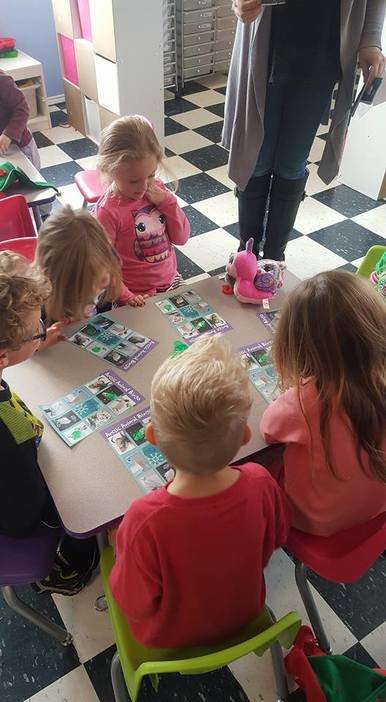
This is just one of our simple, yet highly effective "Invitations to Play." 

Don't those colorful little blocks just say, "PICK ME UP!!!"???

Our children carted these from one area of the room to the next.  They placed them on the scales and weighed them.  Three blocks on this side, eight blocks on that side.  They would readjust the numbers and weigh over and over to see if 6 blocks weighed more than 2, and if 10 blocks weighed more than 1.  They would grab a friend and giggle and guess whose side would go up or down.  They would squeal, "I WON!!!!" with glee when their side was heavier or lighter depending on the rules they had set up for their newly created, self-directed math game.

Our partner educator, Mother Goose Time, sent us these 1 inch colored cubes with our Winter Wonderland theme for the month of December and by our children's reactions these will stay out for a LONG time!
Picture
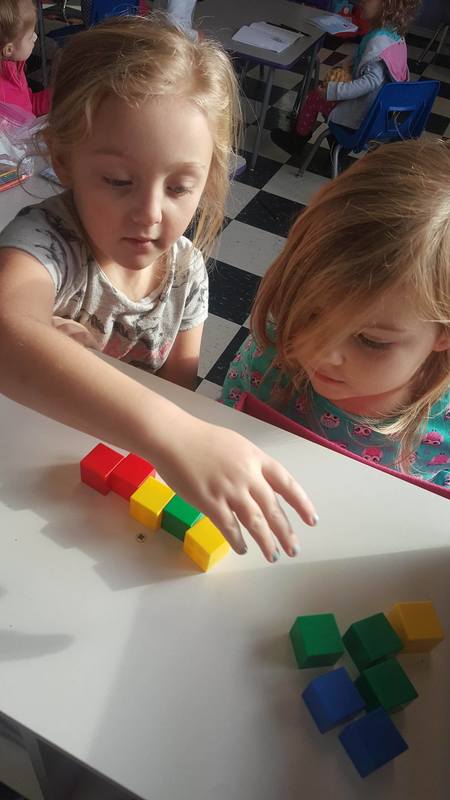
Here they decided to see "How many more would it take to make 10?" So one child set out a certain number of blocks (5 here), and the other child would count along from 5 to determine how to make 10.  This is algebra in the pre-k years.  It is play.  It is a beautiful mix of self-directed learning and mastery that makes this teacher swoon!!! 

Sigh........
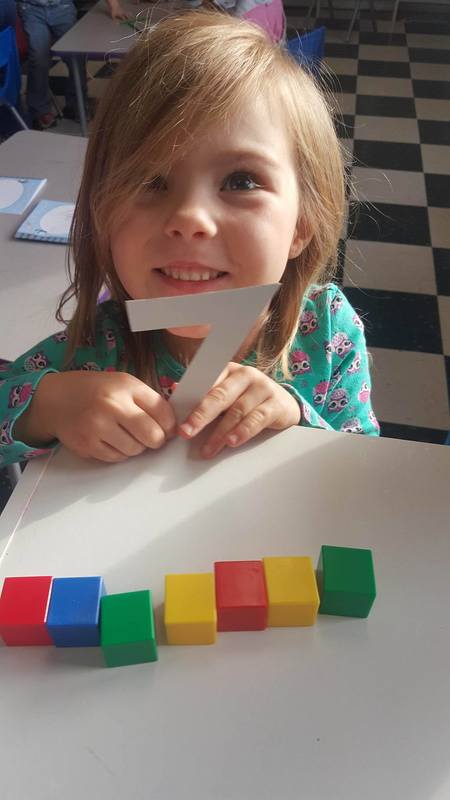
-In this video one of our younger 3's became a bit excited as he grabbed the "7" from his older classmate.  She handled it like a champ!  We have a mixed-age, small private center and we teach our older children to be understanding and patient of the younger ones.  This little learner was focused on the task despite the distractions and obtained her goal!

​Aren't my kids the CUTEST?!?!

As Early Childhood Educators we must provide these experiences.

"The basic math skills teachers provide in early childhood education set the building blocks for the entire academic career. Without learning simple skills like number sense, math concepts and simple application of ideas like adding, children are not prepared to move into elementary education. ​"-Room 241 Team of Concordia University-Portland
Picture

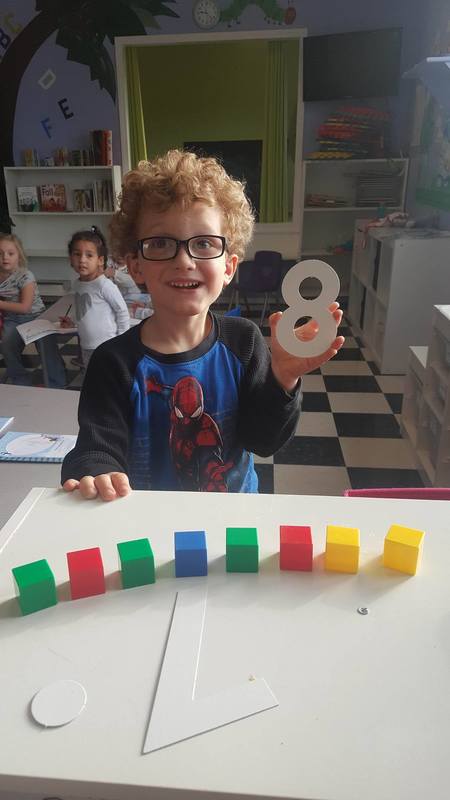
Not only did our students use these little blocks for counting, they used them to build rows and columns alone and with friends.  They use them each day for measuring how long one doll is in comparison to another, and how tall the T-Rex is compared to the Stegosaurus. 
​

"An ideal play activity for promoting early geometric and spatial sense is block building. Playing with blocks, a popular activity found in most early childhood classrooms, can contribute to children’s spatial reasoning, knowledge of geometric shapes, numerical knowledge, and problem-solving skills (Kamii, Miyakawa, & Kato, 2004; Ness & Faranga, 2007; Reifel & Greenfield, 1982). Building with blocks not only engages individual students but also groups of students, especially when block building takes the form of guided play — fun activities structured to provide opportunities for exploration and learning (Weisberg, Hirsh-Pasek, & Golinkoff, 2013). Guided play can be used in early childhood classrooms to engage children in play activities that can connect to the curriculum and promote learning. Studies have found that teaching children through guided play can be more effective than didactic instruction because it encourages children to take on an active role in their exploration (Alfieri, Brooks, Aldrich, & Tenenbaum, 2011; Fisher, Hirsh-Pasek, Newcombe, & Golinkoff, 2013)."-By Geetha B. Ramani and Sarah H. Eason


When we look at the life-long benefits of math in preschool we must take an active approach to providing tools and games that will constantly engage our little learners.  

When these tools are mixed with time, we have a winning technique that draws in the child naturally and the process of laying foundational skills becomes effortless.   "Child's play", if you will...

As always, I wish you well and I hope you get to play today. -L

0 Comments

Preschool and the Arts

12/18/2017

0 Comments

 
Picture
Introducing children to new concepts is one of my favorite things to do in preschool. 

It is so easy to get into the ABC rut prepping them for Kindergarten from a "McDonald's" style checklist and even easier to drown in the mundane of daily routines and circle times.

We have to keep things fresh and engaging.  Part of that is not becoming bored ourselves and our Mother Goose Time curriculum ensures that every single day is fresh, inviting, and engaging!

This is why I LOVE introducing children to the Fine Arts.  It gives them a window into the bigger world they live in and gives us an opportunity to watch them interpret and create masterpieces of their own.

Some would say, "They are too little!" "Why bother?" "Just stick to the basics..."

The basics??!!  The basics assume that children are not capable of amazing things.  "Too little" is a adjective for small thinking.
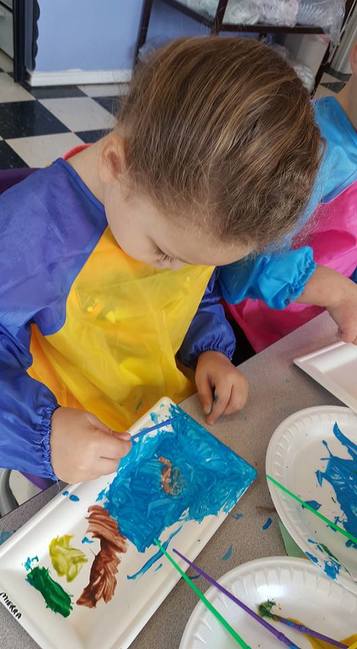
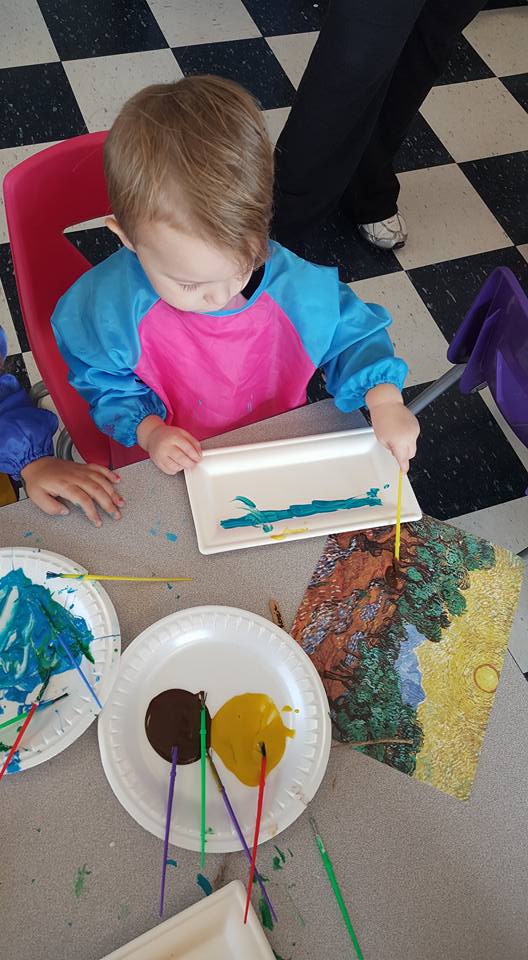
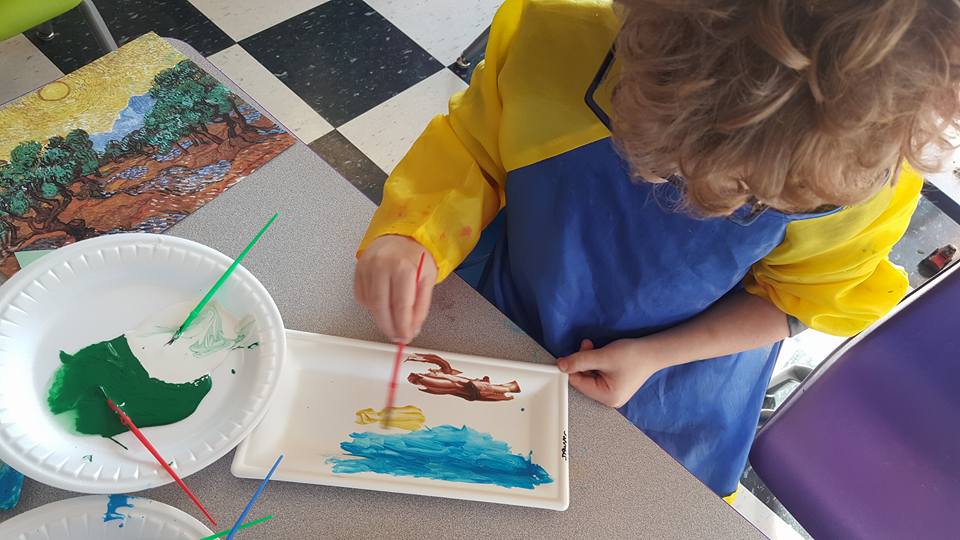
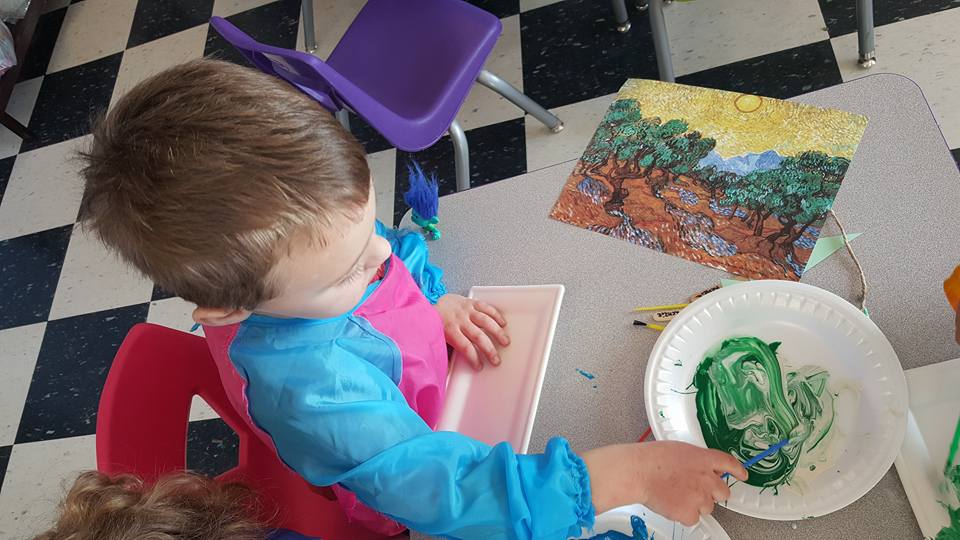
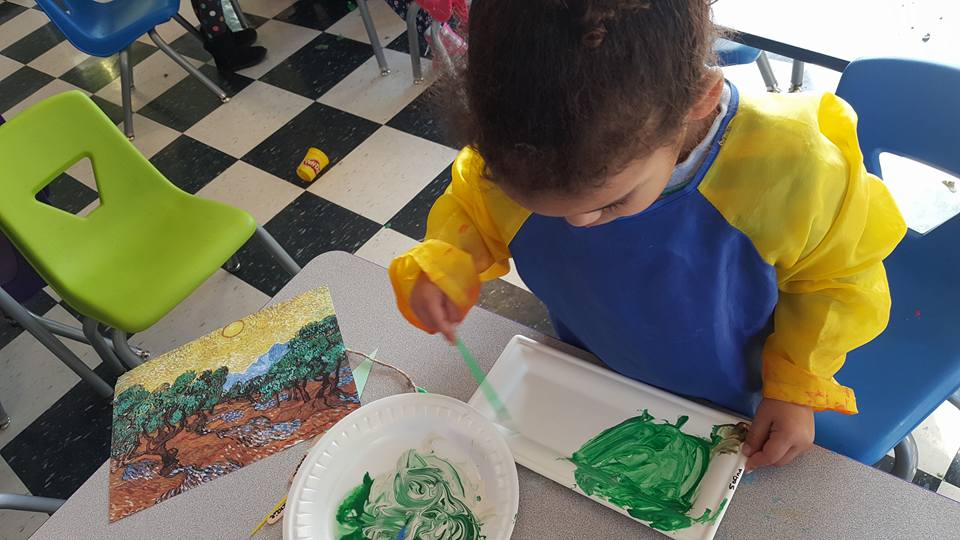
"Why bother?"  Just look for yourself and see what these little learners created with some basic materials.  They are proud.  They are engaged.  They are imagining and creating and inventing and interpreting.  These activities build language skills, fine motor skills, observational and spatial relationship skills.  What's not to LOVE!!!

The Science of Art

Picture
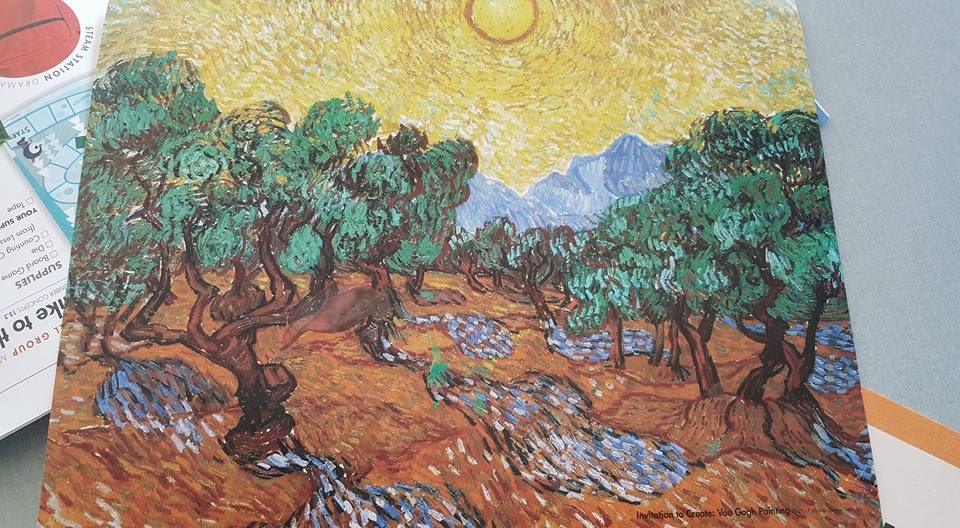
In this Fine Arts lesson we utilized Van Gogh's, "Olive Trees with Yellow Sun," provided by the educators at Mother Goose Time.

​Teaching Fine Arts to preschool children allows teachers and children to learn together through observation and conversation.  Much of how a child learns is first through conversation and engaging each student on the same level. 

"Teachers respond to a student’s comment on a painting by paraphrasing the comment and taking it to the next level,

"Perhaps a student will notice a figure. The teacher will then say, “so you are noticing this figure in the left-hand foreground of the painting?”

“We’re giving them language they wouldn’t normally have in a context that is meaningful to them right in the moment,” she said

"It is important for the teacher to paraphrase the student’s comment in such a way that the student feels understood and the rest of the group can grasp what the student has said, Gulden said. Teachers have to let go of their agendas and ideas and follow the child,"

"Using high-quality artwork is also important," Morin said, "particularly in terms of stimulating observations by the children."

“You can keep going back to a masterwork and see something different every time,” she said. “If it’s not a high-quality work, it doesn’t have that depth.”


,Grace Hwang Lynch, explained this concept well in, "The Importance of Art in Child Development."

"Developmental Benefits of Art

Motor Skills: Many of the motions involved in making art, such as holding a paintbrush or scribbling with a crayon, are essential to the growth of fine motor skills in young children. According to the National Institutes of Health, developmental milestones around age three should include drawing a circle and beginning to use safety scissors. Around age four, children may be able to draw a square and begin cutting straight lines with scissors. Many preschool programs emphasize the use of scissors because it develops the dexterity children will need for writing.

​Language Development
: For very young children, making art—or just talking about it—provides opportunities to learn words for colors, shapes and actions. When toddlers are as young as a year old, parents can do simple activities such as crumpling up paper and calling it a “ball.” By elementary school, students can use descriptive words to discuss their own creations or to talk about what feelings are elicited when they see different styles of artwork.


Decision Making
: According to a report by Americans for the Arts, art education strengthens problem-solving and critical-thinking skills. The experience of making decisions and choices in the course of creating art carries over into other parts of life. “If they are exploring and thinking and experimenting and trying new ideas, then creativity has a chance to blossom,” says MaryAnn Kohl, an arts educator and author of numerous books about children’s art education.


Visual Learning
: Drawing, sculpting with clay and threading beads on a string all develop visual-spatial skills, which are more important than ever. Even toddlers know how to operate a smart phone or tablet, which means that even before they can read, kids are taking in visual information. This information consists of cues that we get from pictures or three-dimensional objects from digital media, books and television.

“Parents need to be aware that children learn a lot more from graphic sources now than in the past,” says Dr. Kerry Freedman, Head of Art and Design Education at Northern Illinois University. “Children need to know more about the world than just what they can learn through text and numbers. Art education teaches students how to interpret, criticize, and use visual information, and how to make choices based on it.” Knowledge about the visual arts, such as graphic symbolism, is especially important in helping kids become smart consumers and navigate a world filled with marketing logos.

Inventiveness
: When kids are encouraged to express themselves and take risks in creating art, they develop a sense of innovation that will be important in their adult lives. “The kind of people society needs to make it move forward are thinking, inventive people who seek new ways and improvements, not people who can only follow directions,” says Kohl. “Art is a way to encourage the process and the experience of thinking and making things better!”


Cultural Awareness
: As we live in an increasingly diverse society, the images of different groups in the media may also present mixed messages. “If a child is playing with a toy that suggests a racist or sexist meaning, part of that meaning develops because of the aesthetics of the toy—the color, shape, texture of the hair,” says Freedman. Teaching children to recognize the choices an artist or designer makes in portraying a subject helps kids understand the concept that what they see may be someone’s interpretation of reality.


​Improved Academic Performance: Studies show that there is a correlation between art and other achievement. A report by Americans for the Arts states that young people who participate regularly in the arts (three hours a day on three days each week through one full year) are four times more likely to be recognized for academic achievement, to participate in a math and science fair or to win an award for writing an essay or poem than children who do not participate."

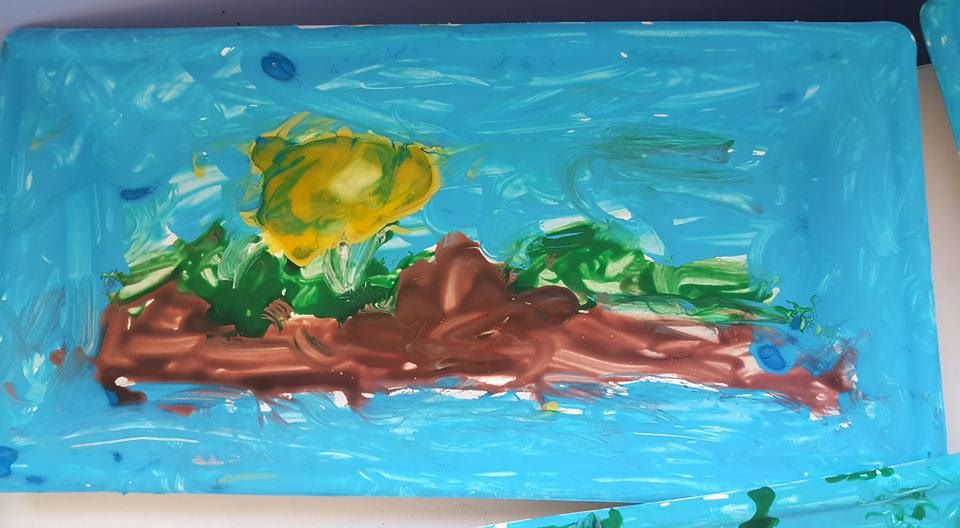
And now......The Masterpiece!

Picture
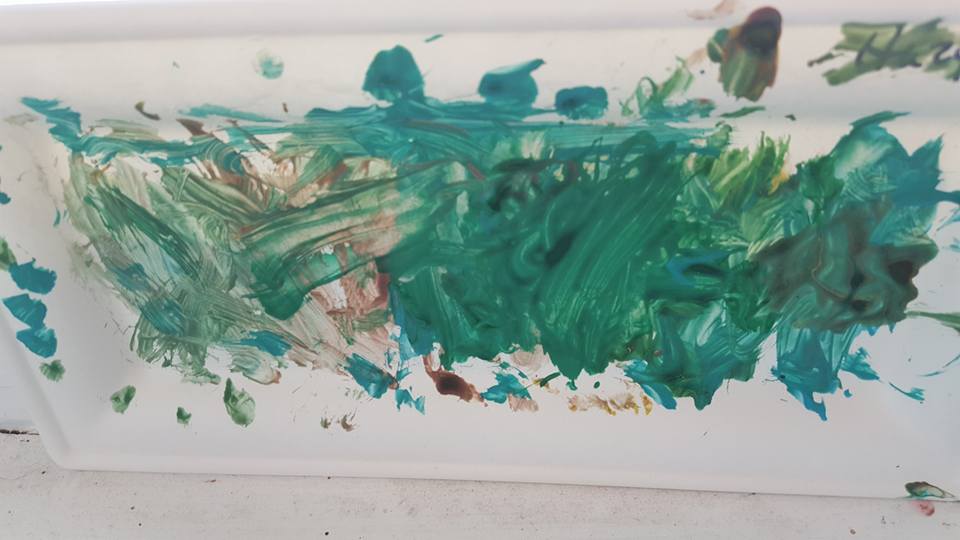
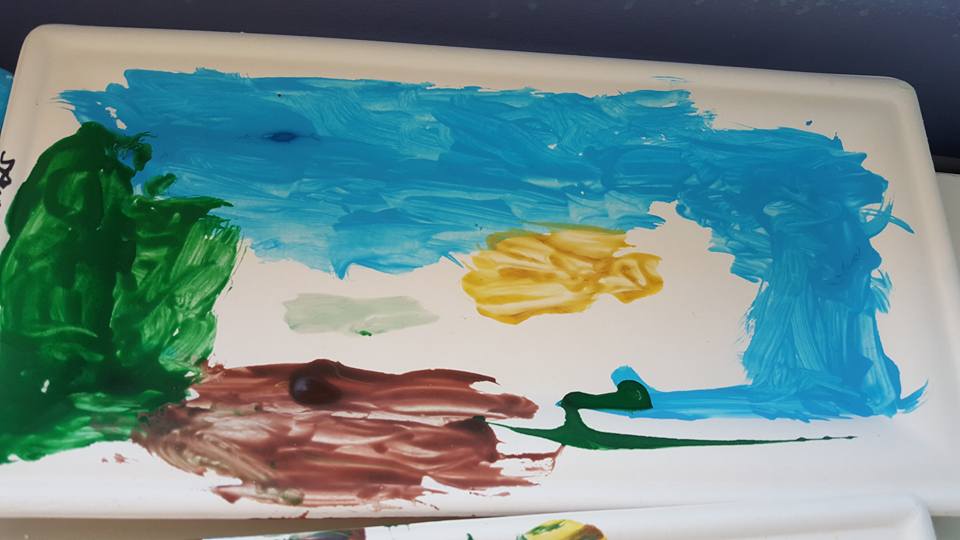
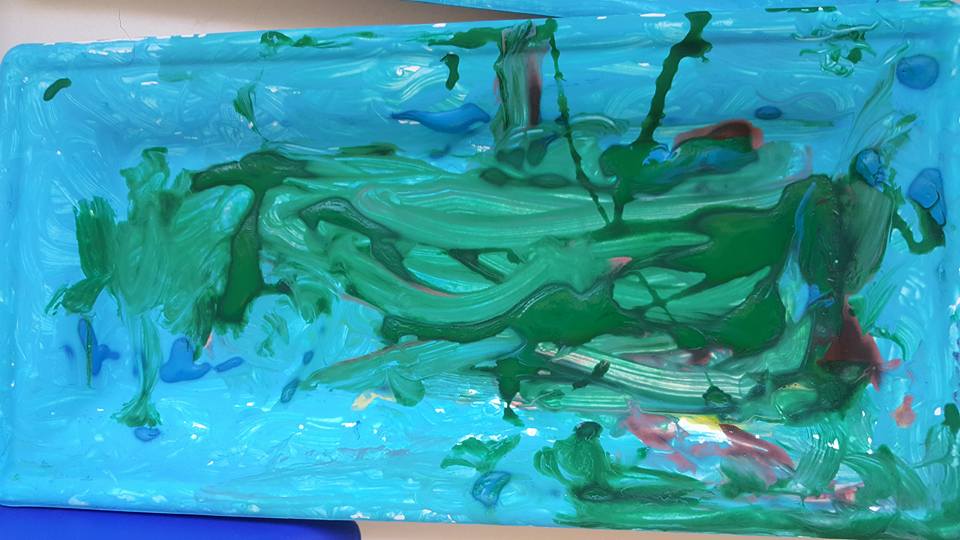
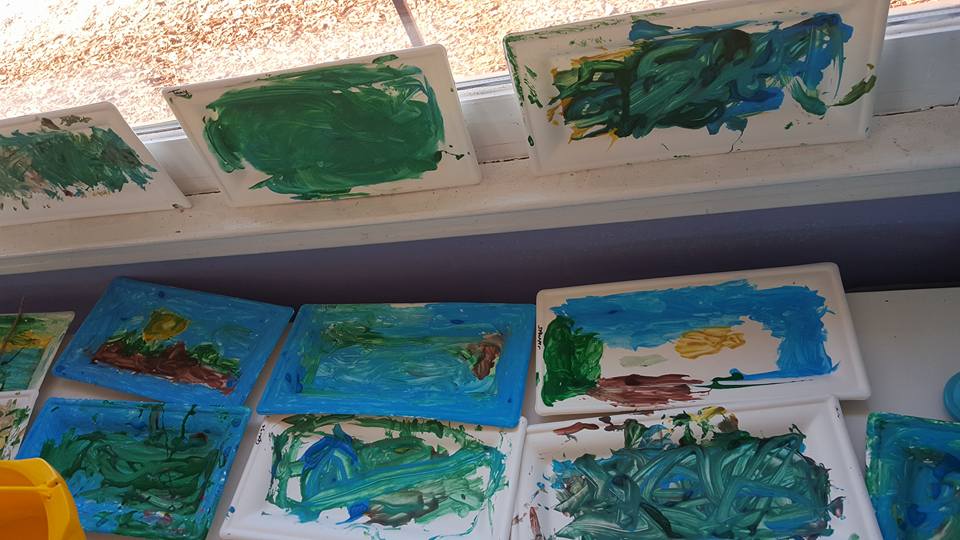
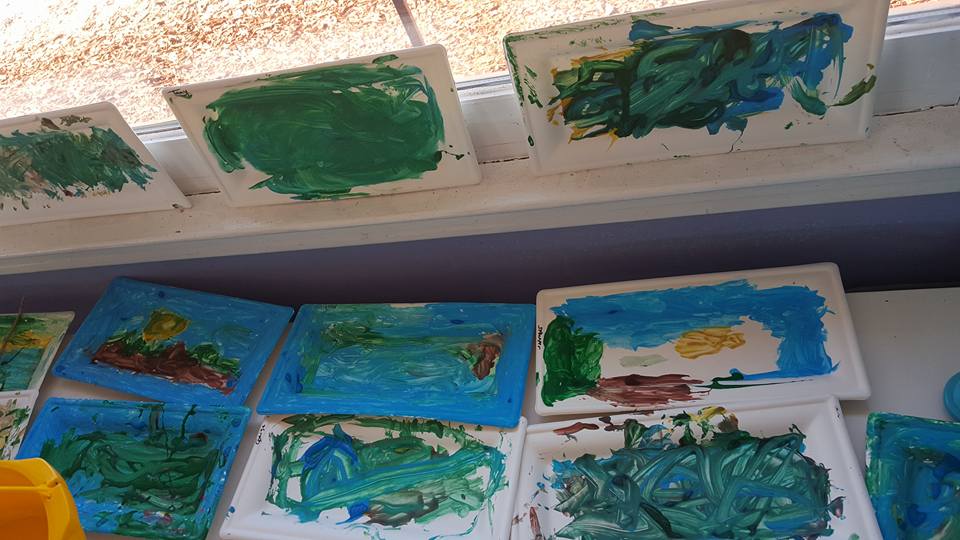
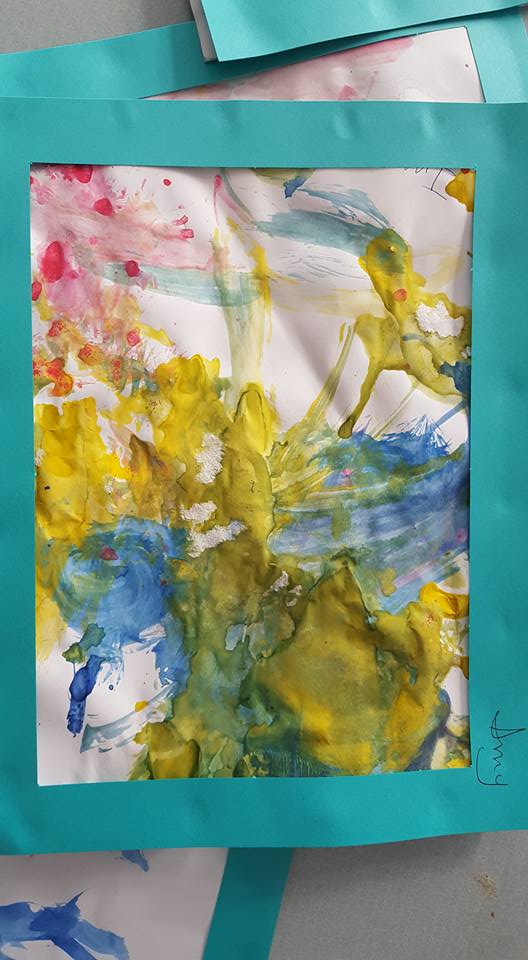
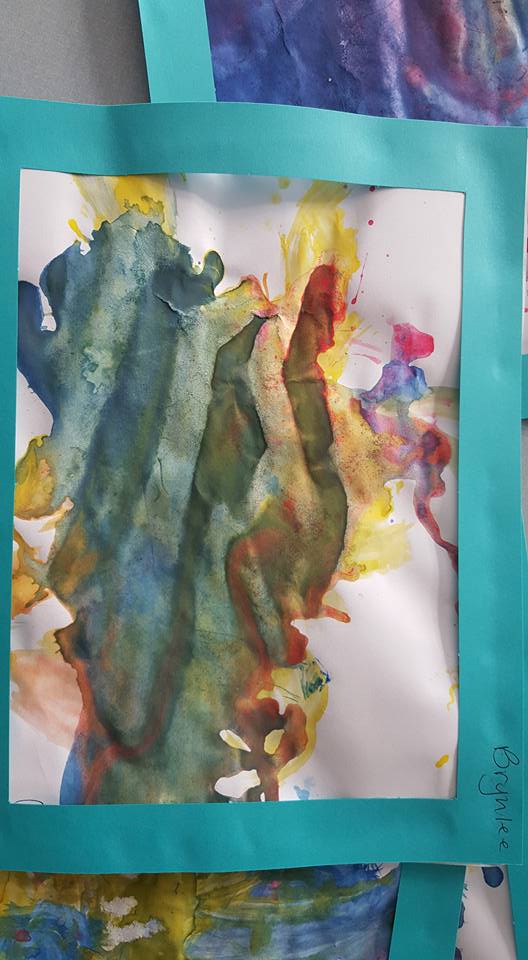
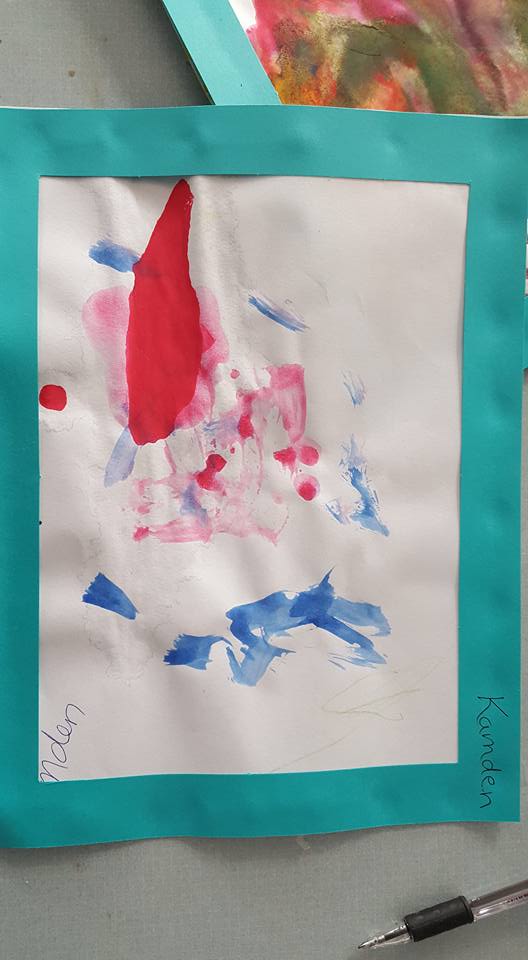
As you can see from the variations of interpretations and level of development each child has a unique masterpiece.  These went home with smiles and compliments and were a grand addition to many art walls and refrigerators.  

We love providing the time and freedom to allow our students to experience the Fine Arts and recreate what is in their own hearts and minds.

All in a day of play at Woolsey Academy.

I wish you well and I hope you get to play today!

​-L
0 Comments

Good Morning Mother Goose!

12/10/2017

0 Comments

 
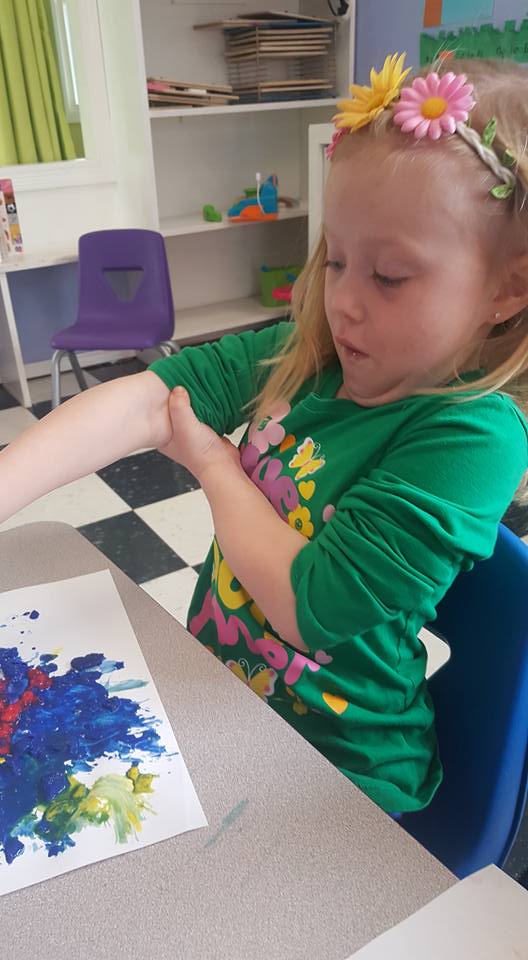
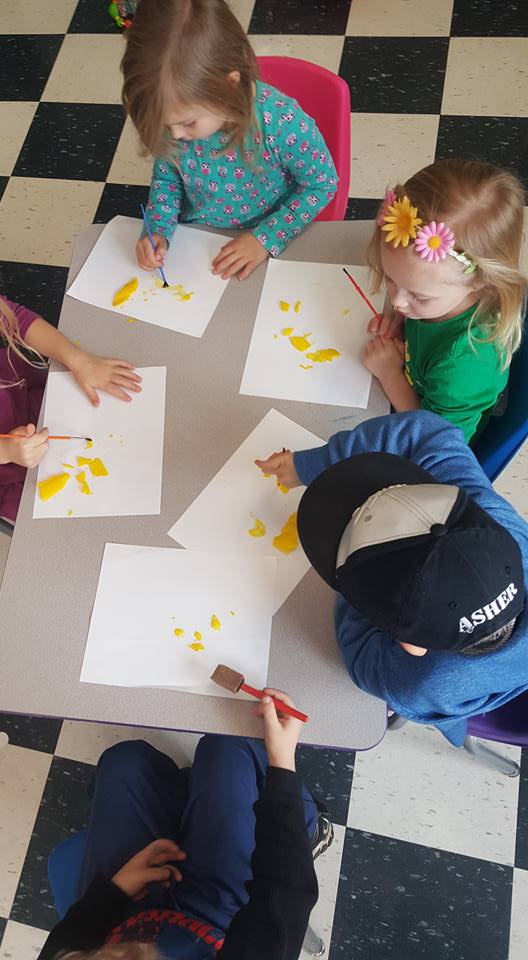
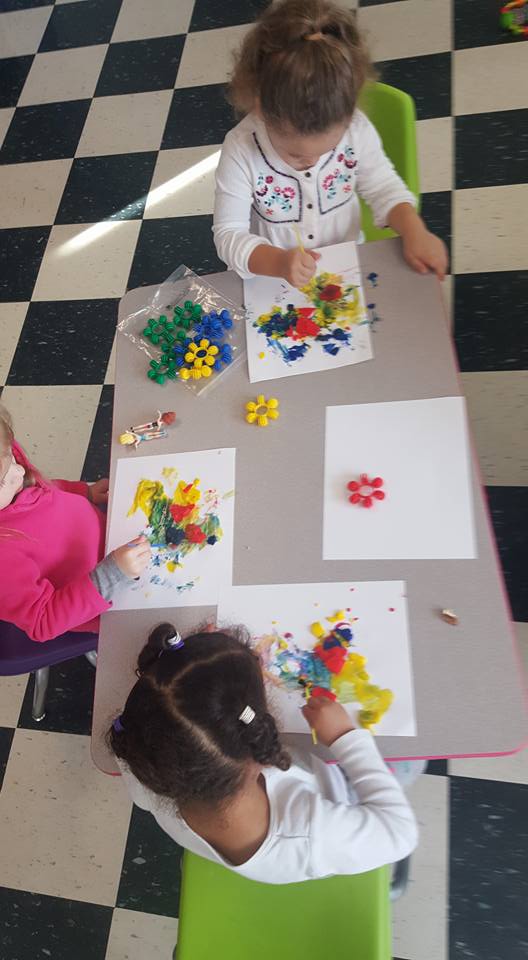
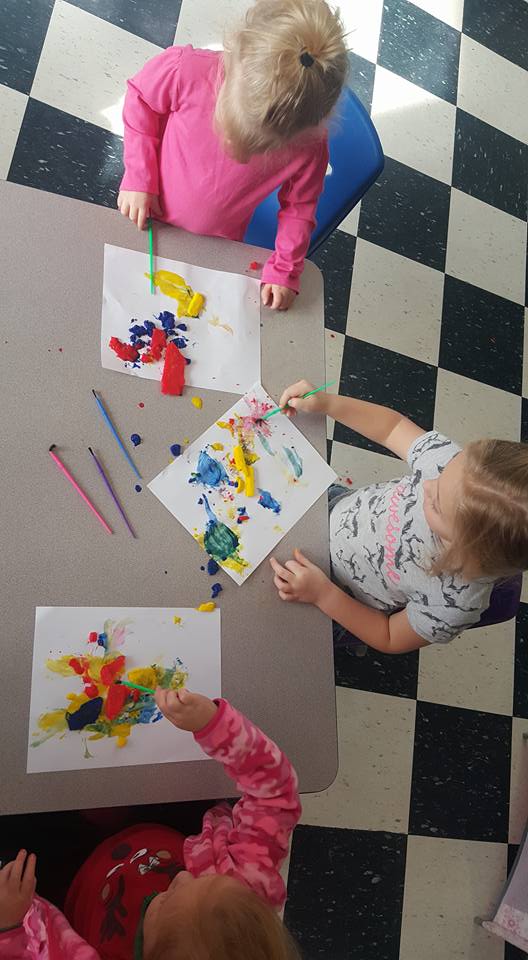
PictureOne of our sweet students excitedly observing that her paint is mixing as it melts and swirls!
Our children LOVE our daily routines with Mother Goose Time. From stories to science to Fine Arts, we are greeted each day to our student's questions, "What are we going to do today?" "What are we making today?"

They know we have a purpose and a plan for their day and they excitedly await our morning meetings to discuss what they are going to be observing, growing, reading, experimenting, painting, and learning each day here at Woolsey Academy.  Made even better is the fact that I know our approach to learning 

"uniquely weaves 33 research-based skills into playful games and discovery projects.
​
.
The cross-disciplinary model supports a child’s on-going social-emotional, physical, language and cognitive development."

In December we get to discover "Winter Wonderland" and our first week was FULL of freezing and melting!

The Science of Discovery

Young children greatly benefit from discovery and being allowed to make their own unique observations through a variety of mediums. 

This fun lessons was packed with opportunity to scrutinize the process of frozen paint as it melted. "It's crunchy!"  "It smells funny!!" "It's squishy!!"  "Ms. Donna, Ms. Donna LOOK AT WHAT MY PAINT IS DOING!!!"  (swoon...)

To which I followed up with exploration and observation questions like, "WOW!  What is your paint doing!?"

"It's melting!"

"I am making GREEN!" 

"Ms. Donna, I see PURPLE!!!"  

We rightfully framed the beautiful masterpieces that our endearing artists created to give them their proper significance.  The S.T.E.A.M. process experienced provided our little learners with invaluable opportunities to extend art and science into play as we, "support children in their exploration by creating an environment that promotes observation, exploration and explanation, asking open-ended questions such as 'What do you think might happen?' or 'What do you see happening?'."

These types of activities are vital to developing, "strategies for active exploration, thinking and reasoning and develop working theories for making sense of the natural, social, physical and material worlds around them."

This was just one example of many experienced in our week of Freezing and Melting at Woolsey Academy!

As always, we wish you well and we hope you get to play today!

-L
.
0 Comments
    View my profile on LinkedIn

    Life is made of moments...

    "There isn't anything more full of hope, joy and peace than a child's smile... It captures the mundane and makes it extraordinary." - LaDonna Woolsey

    I am a www.prekwithme.com blogger. I decided to become one after trying their products because I they are comprehensive and serve my mixed age group well.  I do receive products to review from www.prekwithme.com and do so with my own honest and thorough opinions.  For more information, please contact me at [email protected]

    Categories

    All
    A Little Bit Of This And That!
    A View You Can Use!
    A-Z Alphabet Theme
    C Is For Cookie!
    Continents And Countries
    Curiosity
    Curriculum
    Dandelions And Darlings...
    Happy Halloween!
    Help For Tired Mommas...
    Holidays
    Letter M Monkey
    Letter N Newts
    Letter O Olympics
    Letter P Is For People
    Letter Q Is For Queen
    Letter S
    Letters Learning
    Letter T
    Letter U
    Letter W
    Letter X
    Play Based Learning
    Preschool
    R Is For Rainbow
    Sensory Play
    Teaching And Learning
    Turtles And Trains

    Archives

    January 2025
    September 2024
    November 2019
    September 2018
    May 2018
    April 2018
    March 2018
    February 2018
    January 2018
    December 2017
    February 2017
    December 2016
    November 2016
    October 2016
    September 2016
    August 2016
    July 2016
    June 2016
    May 2016
    February 2016
    January 2016
    December 2015
    November 2015
    October 2015
    September 2015
    July 2015
    June 2015
    May 2015
    April 2015
    February 2015
    October 2014
    July 2014
    June 2014
    April 2014
    January 2014
    November 2013
    October 2013
    September 2013
    August 2013
    July 2013
    June 2013
    May 2013
    March 2013
    February 2013
    January 2013
    December 2012
    November 2012
    October 2012
    September 2012
    August 2012
    July 2012
    April 2012
    March 2012
    February 2012

    Categories

    All
    A Little Bit Of This And That!
    A View You Can Use!
    A-Z Alphabet Theme
    C Is For Cookie!
    Continents And Countries
    Curiosity
    Curriculum
    Dandelions And Darlings...
    Happy Halloween!
    Help For Tired Mommas...
    Holidays
    Letter M Monkey
    Letter N Newts
    Letter O Olympics
    Letter P Is For People
    Letter Q Is For Queen
    Letter S
    Letters Learning
    Letter T
    Letter U
    Letter W
    Letter X
    Play Based Learning
    Preschool
    R Is For Rainbow
    Sensory Play
    Teaching And Learning
    Turtles And Trains

    Follow Me on Pinterest

    RSS Feed

    Follow Me on Pinterest

Location

What Our Clients Are Saying

My husband and I both work full time and during the year 2011 we needed a child care provider for our five year old daughter and our 20 month old son. I am a Special Education Teacher for the Willard RII district in Missouri. I found LaDonna Woolsey on the internet while searching for a child care provider.  I had called numerous places and never felt comfortable with any of them to even make an appointment to meet them in person. I called LaDonna, and almost immediately after the conversation started, I felt a sense of relief and made an appointment to check out her daycare in person, the following day.  When I saw her facility I was absolutely amazed. LaDonna answered all of my nervous mom questions and watching her interact with the children made me realize I had found the perfect person to watch my children during the day. She started providing Child Care services for my children immediately... - Lisa Lassley - Special Education Teacher for the Willard RII 

Contact Us

Subscribe

Join our mailing list today!
Join Now
  • Home
  • Blog
  • About us
    • A Day In The Life
    • Contact Us
    • What Parents Just Like You Think
    • Enrollment Forms
  • Pre k With Me!